Beautiful Isn't Enough: Inside Topcoder's New Design System with PereViki
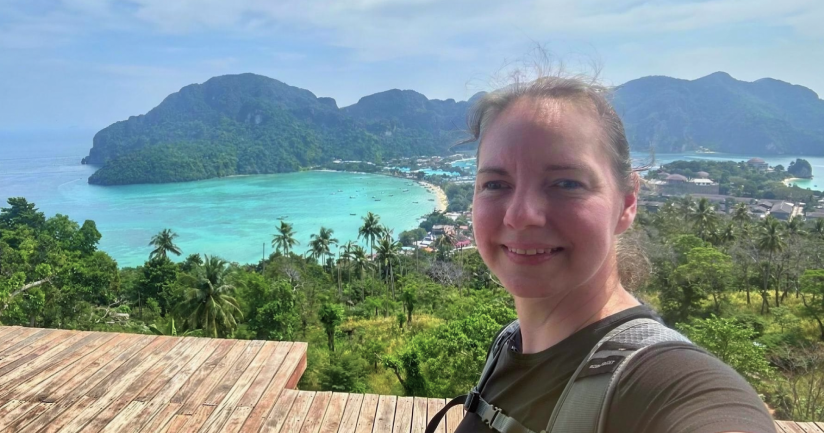
Viki [PereViki] has spent eight years at Topcoder moving through almost every role the community offers: design competitor, copilot, Design Review Board member, mentor, and MVP. Along the way she has designed for HP, Stanley Black & Decker, and NASA. Her latest work is one most members will use every day without realizing it: the new Topcoder Design System, which was put to the test as copilot of the Opportunities Design Challenge.
I've had the pleasure of working closely with Viki on multiple projects, and she's one of the designers I'm proudest to collaborate with. She thinks hard about why things work, not just how they look, and she brings that same curiosity to everything from interface design to bread baking. I sat down with her to talk about the design system, copiloting, AI, and what keeps her learning.
Could you tell new members what you do at Topcoder?
I've probably done a little bit of everything at Topcoder over the past eight years. I started as a design competitor, then, out of curiosity for the background processes, I became a design copilot. Later on I became a member of the Design Review Board, a mentor, and I've been honored with an MVP membership as well. I've also been lucky enough to work on projects for companies like HP, Stanley Black & Decker, and even NASA. Most recently, I've been designing Topcoder's new Design System, and one of the coolest moments was getting to use it in the Opportunities Experience redesign challenge. It was exciting to see other designers build on top of something I had created.
You've been a Topcoder member for eight years. What made you stay so long?
Topcoder has always been a place where I could keep learning because every challenge is different. One month you're designing a drone control station, the next you're working on an enterprise application, and after that something completely different. Every project teaches me something new, whether it's a new industry, a new technology, or a completely different kind of user problem. That constant variety has kept me motivated. I also enjoy that there are so many different ways to contribute. The community is another big reason. Over the years I've met incredibly talented people, both members and clients, and many of those professional relationships have turned into genuine friendships.
You've designed the new Topcoder Design System. What problem is it actually solving?
I'd say the biggest problem was consistency. Over the years, the platform naturally accumulated different visual styles, interaction patterns, and implementation approaches. That made it harder for designers to create new experiences, for developers to implement them consistently, and for members to navigate the platform because similar things didn't always work or look the same.
The Design System creates a common language. It defines reusable components, design tokens, accessibility standards, and documentation, so everyone starts from the same foundation instead of reinventing solutions. That not only makes designing and building products more efficient, but also creates a more predictable and consistent experience for members using the platform.
What would you want members who build on top of it to understand about why it works the way it does and how to use it?
Every decision has a reason behind it. For the Design System, every detail has been discussed, challenged, and refined along the way. A Design System isn't just a library of components. It's a collection of decisions that have already been made, so teams don't have to solve the same problems over and over again.
My advice would be to trust the system and reuse it whenever possible instead of modifying components straight away. Consistency creates a better experience for users and makes products much easier to maintain over time. The system is flexible where flexibility adds value, but it's intentionally opinionated where consistency matters most.
You've used the old challenge listing for most of your eight years on Topcoder. What was it like to run the challenge that replaced it, and what surprised you when the submissions came in?
I have to admit, every time I run a design challenge as a copilot, there's a part of me that's a little jealous because I can't compete at the same time. It's fun to help make a great challenge happen, but sometimes you look at the brief and think, "I wish I could design this one too."
Jokes aside, this challenge was a particularly interesting experience because I had spent years using the old challenge listing myself. Instead of designing from assumptions, I could draw on firsthand experience as both a competitor and a copilot. I already knew many of the pain points because I had encountered them myself. It was great to see how differently the talented designers approached the same problems. Several completely different solutions solved the same usability challenges well, which made judging both exciting and difficult.
What does a copilot do that most members don't see?
I think the work before a challenge is launched is largely invisible to the community. Clients come from companies with very different levels of UX maturity, so a big part of the job is translating business goals, ideas, and sometimes very rough requirements into a challenge brief that designers can understand and work from. A copilot removes uncertainty. The clearer the challenge is, the more time competitors can spend solving the actual design problem instead of trying to figure out what the client meant.
From the reviewer's side, what separates a strong design submission from a winning one?
I've always appreciated problem solving over polished visuals. Great visual design certainly helps, but the submissions that really stand out are the ones where it's obvious that the designer understood the users, the business goals, and the constraints of the project. A beautiful design that solves the wrong problem rarely wins. Those are the ones that get a lot of likes on Dribbble, but don’t make it to production. Attention to detail also matters a lot. Consistency, spacing, accessibility, responsiveness, and well-thought-out interactions often make the difference between a very good submission and a winning one. Those details show that the designer cared about the whole experience, not just how it looks.
What do you think the future of design looks like in an AI world?
The AI discussion has reached the design profession as well. Personally, I'm optimistic. I don't think AI will replace designers, but I do think it will change the way we work. It's already helping with repetitive tasks, generating ideas, creating documentation, and speeding up many parts of the design process. But in the end, design decisions still need people. AI can generate ten different solutions, but someone still has to decide which one actually solves the problem.
One thing that made me even more optimistic was my Interaction Design Master's, which I finished last year. We had a dedicated course on AI and agentic AI taught by Pontus Wärnestål. Instead of treating AI as something to fear, we learned how it works, where it adds value, where its limitations are, and how designers can use it responsibly in their everyday work. I think that's exactly the right approach.
How is AI changing how you design and how you judge design work?
AI has become part of my everyday work. I use it to brainstorm, organize my thoughts, write documentation, and sometimes simply challenge my own ideas. It saves me a lot of time, but I never just accept the first answer it gives me. We often argue :-) One has to think critically, because AI can be very convincing even when it's wrong.
When reviewing design work, I still rely on human judgment. I care about why a decision was made, whether it solves the problem well, and whether the designer demonstrates good judgment. AI can certainly accelerate execution, but it can't replace thoughtful decision-making.
Is there one challenge or project you're especially proud of?
Without a doubt, the two NASA projects I worked on: QGroundControl and HATTB. They were unlike anything else I'd designed before. Both required me to understand highly technical domains and turn complex information into interfaces that people could actually use. Looking back, HATTB had a lasting impact on me. After finishing my Master's in Interaction Design, I'm seriously considering applying for a doctoral program, and that project was probably my first real taste of research-oriented design work.
What hobbies or activities do you enjoy outside of Topcoder?
I'm pretty sure it isn't surprising at this point that I tend to dive deeply into things that interest me. Recently I've been learning bread baking, experimenting with pizza dough, exploring 3D printing, and traveling whenever I get the chance. I enjoy discovering new places just as much as learning new skills. I also love building things, whether it's designing a custom storage solution for my apartment or making small projects just because I want to learn how something works. I guess my real hobby is learning. I just happen to pick a different topic every few months.
One thing I've discovered recently is that I genuinely enjoy exhibiting my work. It started during my Master's, and since then I've had the chance to exhibit at Tallinn Design Week in Estonia, at Ars Electronica in Linz, and most recently at Hungary's Researchers' Night. If you happen to be in Prague from October 7–11, feel free to stop by Designblok and say hi. I'll also be exhibiting in Budapest at the Turbina Cultural Center from October 20–22.
I'm also just launching my design Instagram, where I'll be sharing new projects, exhibitions, and the occasional behind-the-scenes look at my work. If you'd like to follow along, you can find me at PereViki.design.